
The Cayman Islands have a story familiar to many in insurance—entering the industry unexpectedly from somewhere else.

In fact, the islands went from sustaining the economy as an exporter of thatch rope to becoming a thriving reinsurance hub in just over 50 years. Now, the islands are seeking qualified jurisdiction status with insurance regulatory authorities in the U.S.
“We have always been a British overseas territory, very small. Everything is imported,” said Honorable Andre Ebanks, Premier of the Cayman Islands. “Back in the day, we only had one export, which is thatch rope.”
This type of rope comes from the fibers of the silver thatch palm—the national tree of the Cayman Islands—and is typically used for the shipping and maritime industry. It’s served as a pillar of the islands’ economy since the 19th century, peaking in 1964 when 1.3 million fathoms of rope were exported, according to The National Gallery of the Cayman Islands.
“We actually did used to export it. But then things like nylon came along, and it died off,” Ebanks said. “Thankfully, we found financial services, and then we found something to supplement the economy. And it’s grown wildly successful ever since.”
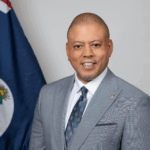
Ebanks served as the islands’ Minister for Financial Services and Commerce last term and was elected on April 30 of this year as the Premier of the Cayman Islands. One of his strategic priorities within the current government—The National Coalition for Humanities—is pushing for growth in reinsurance. It’s an aspect of the islands’ economic development that he understands well, as his ties to the islands’ thatch rope and seafaring history run deep.
“My grandfather, great-grandfather, like many Caymanians, would have gone to sea on a ship to be an actual seafarer moving cargo all over the world because that was a job that they could do. And so, they would send money back home,” he said. “They’ve seen all over the world. They tell stories.”
This seafaring history led to a strong maritime authority on the islands, and even now, the Cayman Islands are a leading jurisdiction for superyacht registrations.
“That’s still driving a big part of the economy,” he said. “So, we’re actually now moving in a way that complements our history but that’s still assisting the global economy.”
After the COVID-19 pandemic shutdowns, Ebanks said that like many countries, the islands’ government was thinking about the next economic opportunity. With strong investment funds, banking and private trust client business, three opportunities were identified for a next step: reinsurance, family offices and technology.
