
Record-breaking temperatures seared the eastern US last month, leading to power emergencies across the region. The cause: an enormous ridge of high pressure that settled on the region, known as a heat dome.

This phenomenon has also already struck Europe and China this summer, leading to the temporary closure of the Eiffel Tower and worries about wilting rice crops, respectively. But while heat domes are easy to identify once they strike, they remain difficult to forecast — a problematic prospect in a warming world.
“There is a world of difference between normal summer heat and record or near-record breaking extreme heat,” said Scott Handel, lead forecaster at the US Climate Prediction Center. “While normal summer heat can be dangerous, extreme heat can be particularly life threatening.”
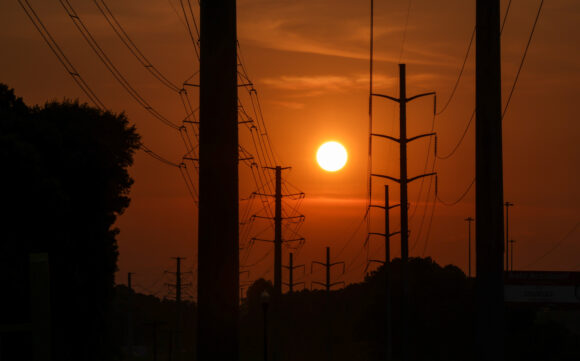
Heat dome is used to describe extreme heat waves to the general public that captures their menace, said Zach Zobel, a scientist at the Woodwell Climate Research Center. They occur when a large high pressure system settles over a specific area, baking it under stagnant air and the sun’s unrelenting energy. That locks in more heat and can intensify the area of high pressure, creating a self-reinforcing cycle.
Read more: Derechos: An Uncommon And Destructive Weather Event
Heat domes can occur at any time of year, but they’re particularly dangerous during summer, with wide-ranging societal and economic impacts in the billions.
Wildfires and droughts are often the byproduct of extreme heat and have caused some of the largest climate-related disasters in the US. From 1980 to 2024, 23 wildfires caused $147.9 billion in damage and killed 537 people while 32 droughts extracting a toll of $367.6 billion and killed 4,658, according to a database of billion-dollar disasters that was updated until this year by the US Centers for Environmental Information.
Between 1979 and 2022, more than 14,000 Americans died directly from heat-related causes according to death certificates, the US Environmental Protection Agency said. In the summer of 2022, an estimated 61,672 people died from heat related causes, according to a July 2023 paper published in the journal of Nature Medicine.
Read More: Climate Change Led to At Least 16,500 Heat Deaths in Europe This Summer
A prolonged heat dome can stress crops, particularly heavily traded corn and soybeans. Electricity prices and demand soar when temperatures rise and stay elevated for prolonged periods, said Anthony Chipriano, a forecaster at Vaisala. The dead, hot air under these massive systems can limit the tonnage carried by airliners, kink railroad tracks and crimp the output of wind turbines.
For these reasons, meteorologists are opening their toolboxes to try and figure out where and when heat domes will strike.
“I don’t have the same ability to predict heat domes like cold air outbreaks, but there are some trends,” said Judah Cohen, director of seasonal forecasting at Atmospheric and Environmental Research Inc.
Meteorologists know, for example, the jet stream — a river of fast-flowing air girdling the globe — naturally migrates northward in summer and they can measure how fast it moves.
