
he Federal Reserve’s former top-ranking official overseeing climate risk says the US economy faces a series of long-term, structural shocks as a result of increasingly extreme weather patterns.

Kevin Stiroh, who left the Fed earlier this year after it wound down large parts of its work on monitoring how global warming is impacting financial stability, said banks should expect to see the fallout “materialize” in balance sheets and income statements.
“Climate-related shocks are likely to be wide reaching and secular, rather than narrow and cyclical,” Stiroh said in an interview. “There’s a long-term trend, certainly on the physical risk side, that could impact bank business models.”
Despite those risks, banks and investors have yet to properly map out how climate-related losses will be distributed, Stiroh said. Those at risk include homeowners, banks, insurers and the holders of securitized financial instruments, he said.
Under President Donald Trump, the US has ceased monitoring many of the data points that would help the finance industry prepare for the climate risks ahead. Without that data, banks and investors risk allocating capital in ways that don’t reflect the potential future losses associated with extreme weather events.
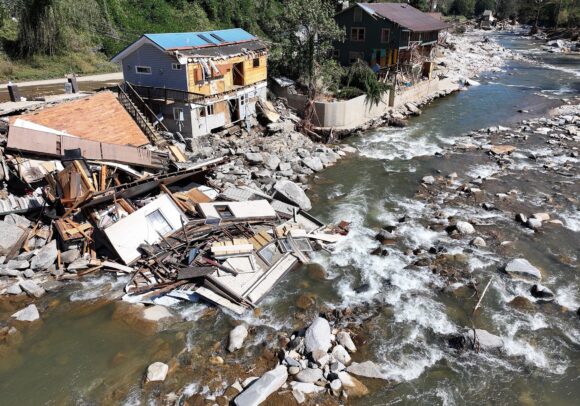
“If you think about any sort of natural disaster, whether it’s the hurricanes in North Carolina last year or the wildfires in California, these have massive damages,” Stiroh said. “But the really difficult question is, who ultimately bears those losses?”
Figuring out how those shocks ripple through the economy is “one of the most critical questions for effective risk management, and then ultimately any policy responses,” he said.
The Fed appointed Stiroh to a leadership role with the Board of Governors on climate risk in 2021. But the US central bank has since taken major steps to deprioritize work on assessing the threats that global warming poses to financial stability. Earlier this year, the Fed disbanded its Supervision Climate Committee, which was chaired by Stiroh, along with other internal climate groups.
The Fed also has taken efforts to downplay the need to make climate risks a focus of global financial rules. That includes a largely successful campaign to pressure the Basel Committee on Banking Supervision to water down its climate program, Bloomberg has previously reported.
The development has led to divisions in how financial supervision is handled in the US, where Trump has called the very idea of climate change a “con job,” compared with other parts of the world. In Europe, for example, policymakers require banks to monitor climate risks, with the European Central Bank recently noting that mortgage portfolios are in particular need of attention.
